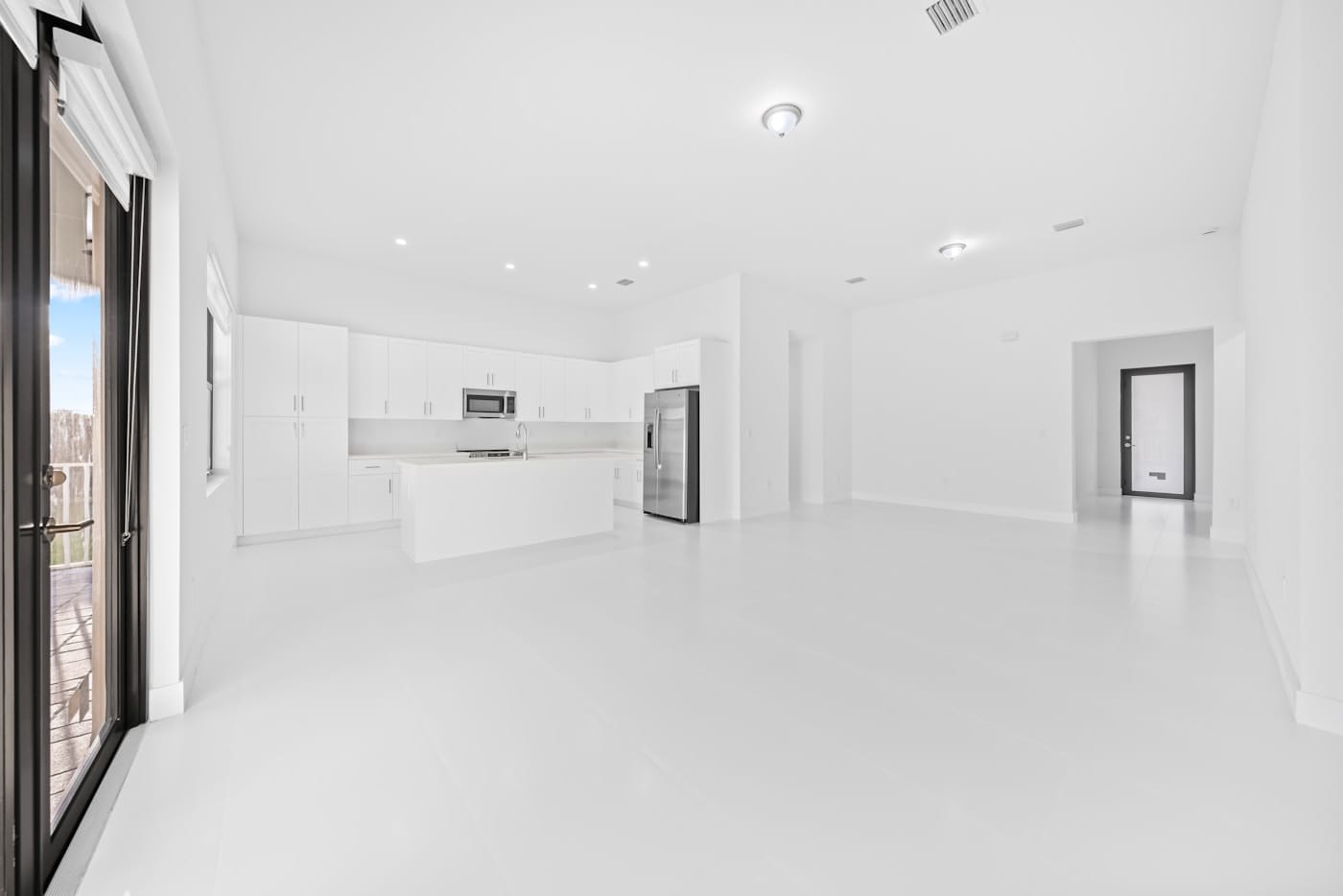
Every renovation dollar does two jobs: it improves your life in the house today, and it either holds or loses value when you eventually sell. In a market as expensive as Greater Vancouver, buyers scrutinize homes carefully, and some improvements consistently earn their keep while others quietly evaporate at the negotiating table. Rather than quoting return-on-investment percentages that shift with every market cycle, this guide looks at which projects tend to hold value in our region and why.
Which renovations tend to add the most value in Greater Vancouver?
Kitchens and bathrooms lead, followed by legal income suites, energy efficiency upgrades, and straightforward curb appeal work. These projects hold value because they address what nearly every buyer in this market cares about: the rooms they use daily, help carrying a large mortgage, and a home that will not surprise them with big bills.
Kitchens sit at the top because they anchor how buyers perceive an entire home. A dated kitchen colours the impression of every other room, while a well-executed kitchen renovation makes the whole house feel maintained. On our published range, kitchen projects typically run $25,000 to $80,000 and up depending on scope and finishes, and mid-range renovations with durable materials tend to hold value better than ultra-high-end builds in modest neighbourhoods.
Bathrooms follow closely, particularly adding a bathroom to a home that is short one. A house with a single bathroom competes poorly against comparable listings, and buyers mentally price the shortfall. A bathroom renovation typically falls in the $15,000 to $50,000 and up range on our published pricing, with ensuite additions and fixing a one-bathroom layout generally being the strongest value moves.
Why are income suites so valuable in a high-cost market?
Because a legal suite changes the buyer's math. In Greater Vancouver, where carrying costs strain even strong incomes, a home with a registered secondary suite lets a buyer offset their mortgage with rental income, and lenders can factor that income into qualification. That widens your pool of potential buyers to include people who otherwise could not afford the property at all.
The word legal is doing heavy lifting in that paragraph. A suite finished without permits may function identically, but it cannot be advertised as a legal suite, may not satisfy a lender or insurer, and can become a liability during a sale if a buyer's inspector flags unpermitted work. Municipalities across the region, including Surrey, have defined processes for legalizing suites, covering ceiling heights, egress windows, fire separation, and parking.
Basement suites are the most common route, but garden suites and laneway homes are expanding options as municipalities loosen infill rules. Larger projects like residential additions can also create suite potential, with additions on our published range running $200 to $400 per square foot. Whether a suite conversion pencils out depends on your lot, your layout, and municipal rules, which is exactly what a consultation sorts out.
Do energy upgrades really matter to buyers?
Increasingly, yes. Heat pumps, upgraded insulation, and modern windows have moved from nice-to-have to genuine selling features in BC, driven by hot summers, rising utility costs, and buyer awareness of rebate programs. A home that already has efficient heating and cooling removes a future project, and a future cost, from the buyer's mental ledger.
Energy work rarely photographs well, which is why sellers underrate it, but it surfaces powerfully in listing descriptions and inspections. "New heat pump with cooling" answers a question every Lower Mainland buyer has been asking since the recent heat waves. Government rebates for heat pumps and envelope upgrades exist in BC and change over time, which can reduce your cost of ownership regardless of when you sell.
The quieter benefit is inspection resilience. Homes with updated mechanical systems, dry crawlspaces, and healthy attics sail through the inspection period, while deficiencies found at inspection routinely cost sellers more in renegotiation than the repairs would have cost done proactively.
What is the cheapest improvement that pays off?
Paint, inside and out, along with basic curb appeal. Fresh, neutral colour throughout a home is the least expensive transformation available and directly shapes first impressions, both at the curb and in listing photos, which is where every Greater Vancouver buyer now begins their search.
Beyond paint, the high-yield small items are the ones buyers touch and see immediately: front door and hardware, lighting fixtures, cleaned-up landscaping, and repaired fencing. None of these is glamorous, but together they signal a maintained home. Our painting and finishing work often serves exactly this purpose ahead of a listing.
The framing to keep in mind: buyers pay for move-in ready and discount for to-do lists.
Which renovations tend not to hold their value?
Highly personalized finishes, over-improvement for the neighbourhood, and swimming pools are the usual suspects. The pattern behind all three is the same: money spent on things the next owner would not have chosen, or would actively pay to remove.
Personal taste is the classic trap. Bold tile, unusual colour schemes, and highly specific custom features narrow your buyer pool rather than widening it. Renovate boldly if it serves your enjoyment of the home for years to come, but go neutral and timeless if resale is on the horizon. Over-improvement is its own version: the most expensively renovated house on the street tends to be priced by its street, not its finishes.
Pools deserve their own mention in a BC context. Our swimming season is short, maintenance is year-round, and many buyers with young children see a liability rather than a luxury. A pool can genuinely subtract from a home's marketability here in a way it might not in warmer markets.
How do permits and documentation protect resale value?
Permitted, documented work is provable work, and proof is what buyers pay for. A folder of permits, final inspections, and warranties turns your renovation claims into verifiable facts, while unpermitted work invites price reductions, financing complications, and in some municipalities, orders to open up or redo the work.
This matters more every year as due diligence tightens. Buyers' agents routinely check municipal permit records against visible renovations, and mismatches surface at the worst possible moment in a transaction. Keeping records is cheap insurance: permits, drawings, invoices, and product warranties, all in one place. For a deeper look at planning projects properly from the start, see our home renovation guide for Greater Vancouver.
Frequently asked questions
What renovation should you do first if you plan to sell in a few years?
Address anything an inspector would flag first, such as roof, mechanical, or moisture issues, because deficiencies cost more at negotiation than they cost to fix. After that, kitchens and bathrooms deliver the most visible impact for most Greater Vancouver homes.
Does a basement suite need to be legal to add value?
An unpermitted suite adds far less value and can create real problems during a sale, from financing complications to liability concerns. A legal, registered suite is what lenders, insurers, and buyers give full credit for, and it can be marketed openly as rental income.
Are renovation costs predictable enough to plan around?
Broad ranges are knowable, such as our published bathroom, kitchen, and addition ranges, but your specific cost depends on scope, materials, and the condition of the existing structure. A free quote against a defined scope is the only number worth planning with.
If you are weighing which renovation makes sense for your home and your timeline in Surrey or Greater Vancouver, we are glad to talk through the options with resale in mind. Request a free consultation or call 778-861-6482 and we will help you put your renovation budget where it works hardest.
Services Related to This Guide
Planning a Renovation?
Get a free consultation and quote from a fully insured Surrey general contractor.
Get a Free Quote